






Pedagogical proposal
A pedagogy centred on experience and meaning
Learning is understood as an intentional and conscious process that integrates experience, reflection and meaning. These are the keys that guide our pedagogical practice.
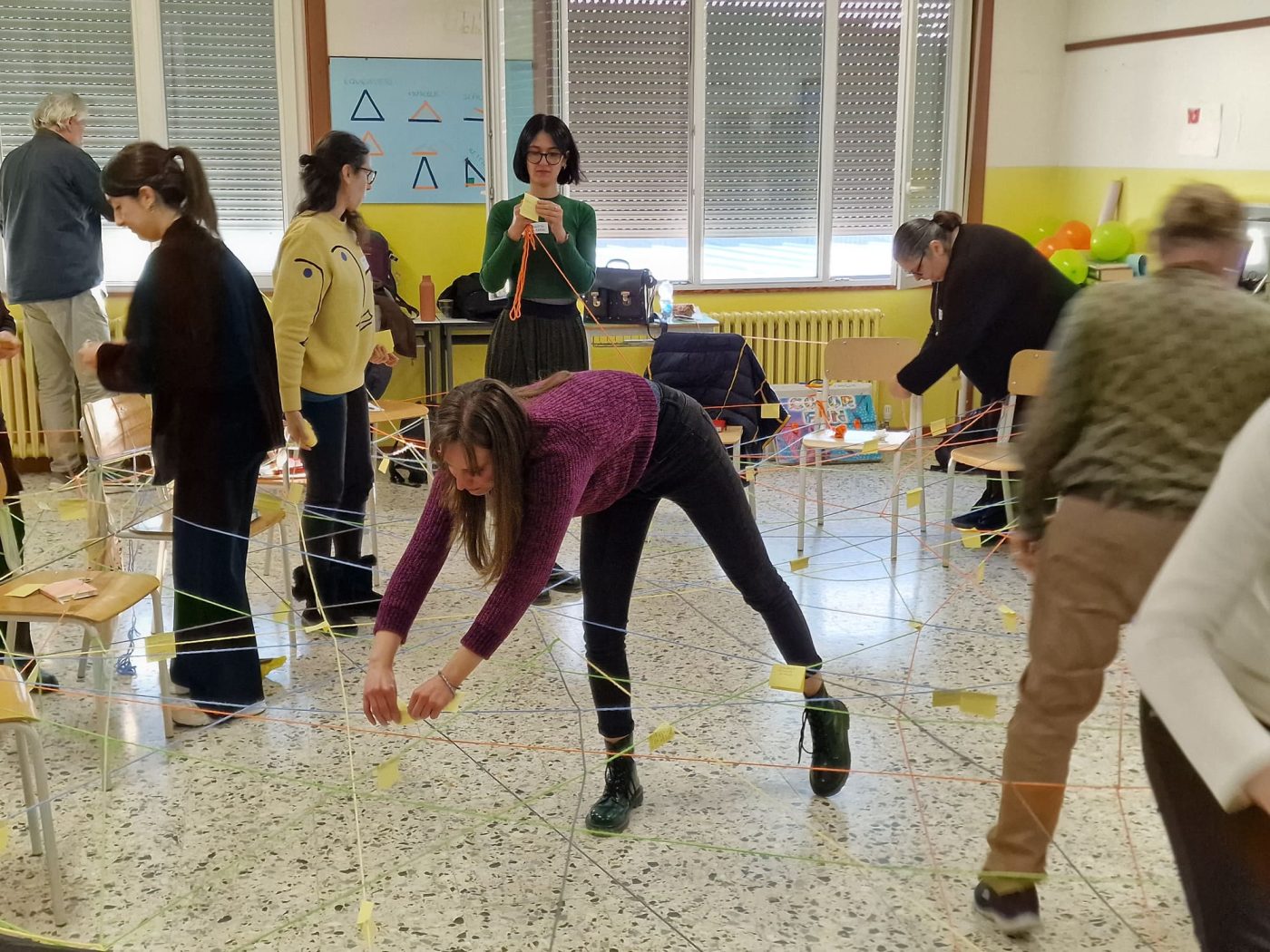
Active consciousness
Learning is understood as an intentional and conscious process in which consciousness is not passive, but an act that is directed towards the world. From this perspective, the person can recognize and orient the direction of their consciousness, giving unity to their experience and opening up possibilities of transformation in relation to the reality one wishes to build.
We call this process intentional learning: a way of learning in which the subject does not passively receive contents, but actively orients their consciousness towards the construction of meaning.
Experiential methodology
Learning takes place through integral experience and its reflection, attending to the vegetative, motor, emotional and intellectual dimensions and the inner experience.
We work with all the external and internal senses (kinesthesia and cenesthesia), integrating action and reflection as parts of one and the same process.
Playfulness, artistic languages, concrete materials, technologies, audiovisual media and guided meditations —among others— are the main resources and supports used in our methodology.
Care of the setting and the conditions
Regarding the setting, we ideally work in spacious and bright spaces, with the necessary working elements, avoiding or reducing elements that are distracting.
The conditions to attend to range from the preparation of the educator who coordinates the learning experience, in which the adult disposes themselves internally to enable the experience from the best physical, emotional, relational and mental conditions.
This can be translated into the exercise of the 5 keys of learning proposed by Aguilar and Bize (2011). The educator seeks to produce relaxed attention, a good environment with good humour, and to enable affectivity and intergenerational dialogue so that the new occupies its place in the person and becomes part of their being.
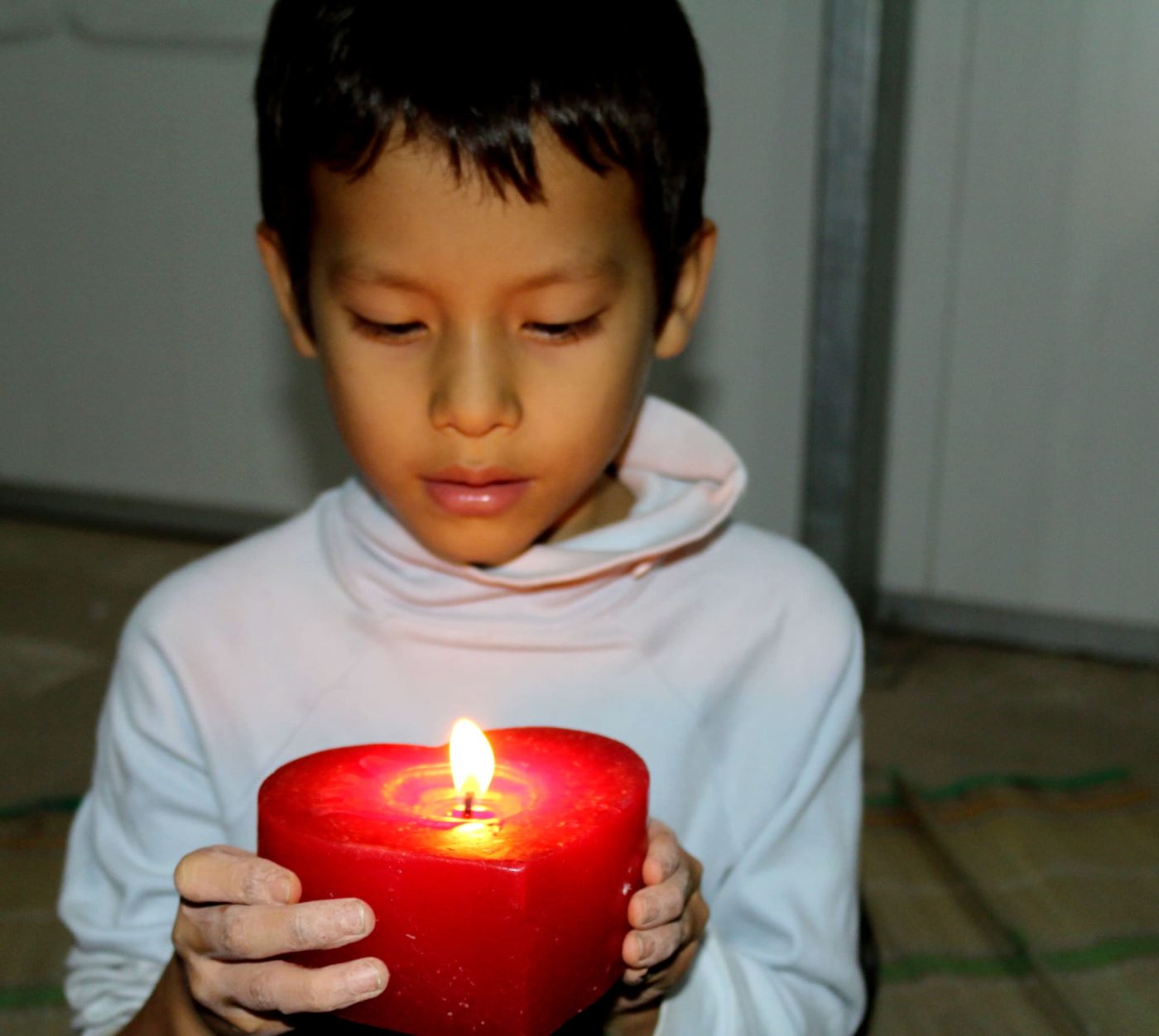
Likewise, at COPEHU we incorporate the 6th key, Learning and spirituality, which enables senso-perceptive channels, since we work with cenesthesia in the interiority of the space of representation, taking the psychophysical energy to other levels of consciousness, making possible the connection with elevated and inspired states, capable of producing meaningful, deep and transcendental learning.
The role of educators
Our conception of the educator encompasses every adult person, for we are in contact with the new generations, and even without considering it, we become their referents by being a model of conduct in the various contexts in which we operate; that is, we are building a landscape of formation.
From this understanding, it becomes unavoidable to work on one's own process of humanization, seeking coherence between what we think, feel and do, so that our presence and our actions can offer the best conditions to accompany the new generations in a humanizing and nonviolent direction.
On the other hand, from the relational standpoint, the adult-educator fulfils the function of facilitator, companion and guide, granting the leading role to children and young people in their learning. The aim is thus to understand and respect the stage of life, practising and fostering a positive tone and climate, nonviolent modes of communication, and recognizing the intentionality proper to that human being who is constituting themselves in the world.
Inner dimension and meaning
Humanizing education also implies contact with one's own interiority, the search for meaning and the development of consciousness.
Our approach integrates the spiritual dimension as a constitutive and profound aspect of the human being, understanding it as an inner experience that transcends any framework of religious belief or non-belief.
From the standpoint of learning, spirituality opens up a world of experiences that go beyond the everyday, leading us to have elevated registers such as, for example: of gentle joy, of peace, of compassion, of greater attention and self-awareness, of a transcendent and deep sense of life, among others. These registers become recorded in the intra-body or cenesthesia, installing a new way of being, of relating to other people and of interpreting the world.
For the development of this dimension we draw on the tools of The Message of Silo, which provide a universalist, essential and evolutionary view.
Within this framework, spirituality brings a depth to the educational process that broadens the possibilities of understanding, sensitivity and development of the human being.